How to Dry Clothes Indoors Faster
Drying washing outside is easy in summer.
A wet British winter is another matter.
Put a full washing load onto an airer inside the house and all of the water remaining in those clothes eventually has to go somewhere.
Without sufficient ventilation or moisture control, much of it ends up in your indoor air.
That can contribute to steamed-up windows, condensation and eventually mould in vulnerable areas.
Government guidance specifically identifies washing and drying clothes, cooking and showering as everyday sources of indoor moisture.
Fortunately, you can make indoor drying significantly faster without automatically reaching for the tumble dryer.
1. Remove as Much Water as Possible in the Washing Machine
The cheapest water to remove is the water your washing machine extracts mechanically.
Before hanging clothes up, use the fastest suitable spin speed for the fabric.
If a load still feels unusually wet after the programme ends, consider running an additional spin cycle.
Every extra gram of water extracted by the washing machine is water that doesn’t have to evaporate into your house later.
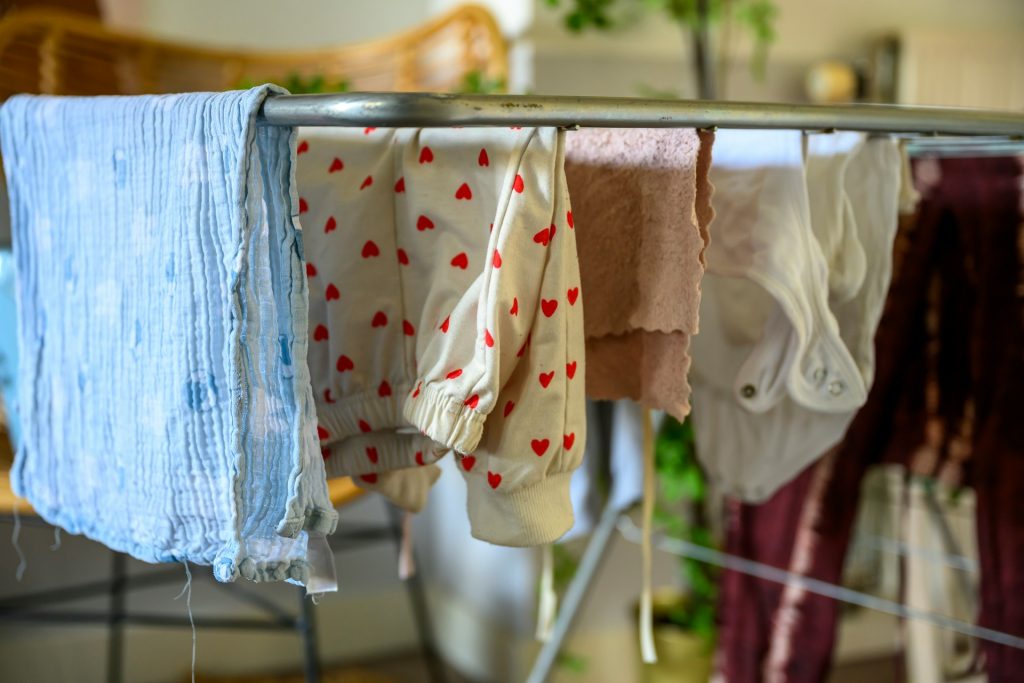
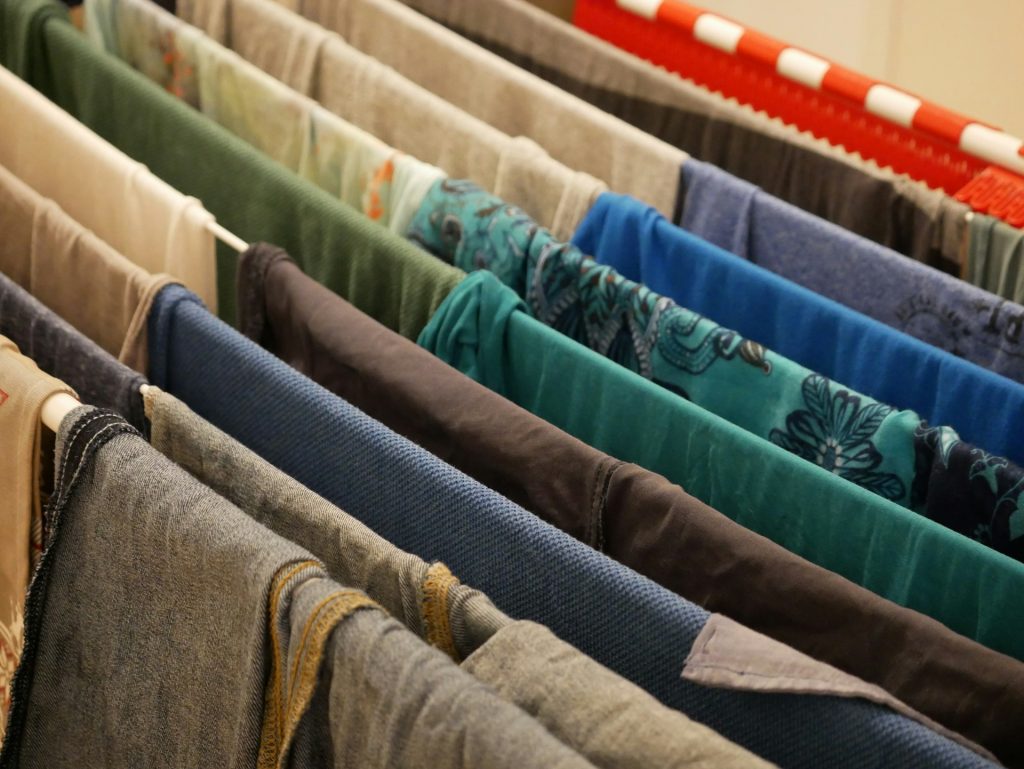
2. Don’t Overload the Airer
This makes an enormous difference.
If shirts, towels and trousers are touching each other, humid air becomes trapped between them.
Instead:
-
leave a gap between garments
-
unfold pockets
-
open waistbands
-
spread towels across multiple rails where possible
-
hang shirts on hangers
-
avoid stacking several items over the same bar
The goal is to expose as much wet fabric to moving air as possible.
3. Concentrate Your Drying in One Room
Rather than spreading damp washing all over the house, choose one suitable drying area.
A spare room or utility room can work well.
This allows you to control what happens to the moisture rather than allowing it to spread throughout the property.
If using a dehumidifier, a smaller enclosed room is also much easier for the machine to control.
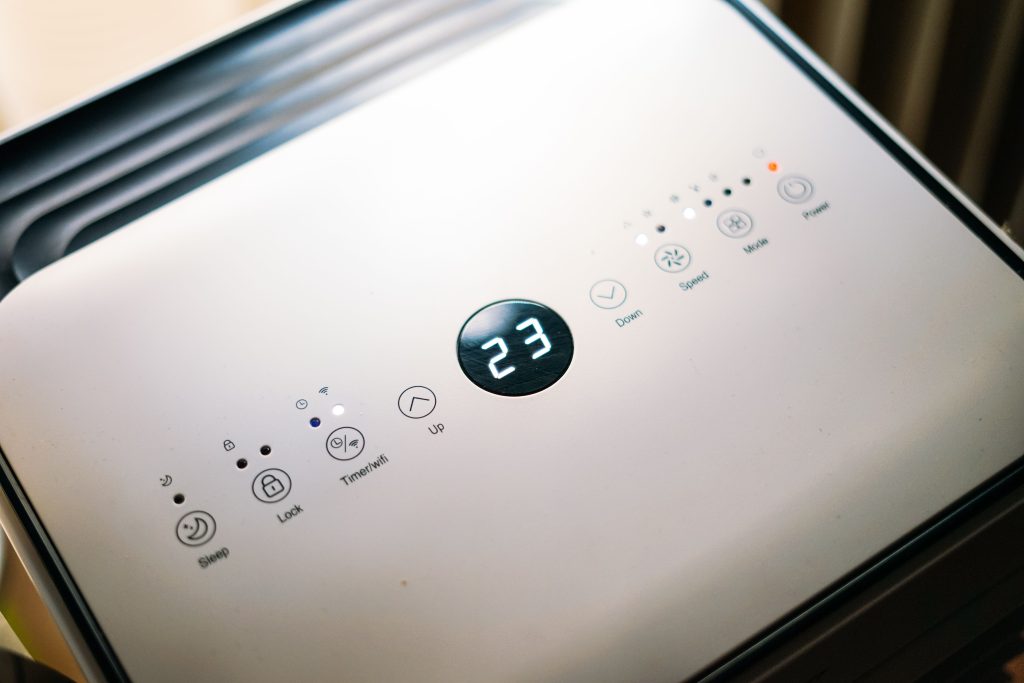
4. Use a Dehumidifier
A dehumidifier is particularly useful because it doesn’t simply move moisture elsewhere.
It collects it.
Place the machine near the clothes airer with enough clearance for its inlet and outlet.
If it has a movable louvre, aim the dry airflow through the laundry.
Dedicated laundry modes typically increase airflow and may run for a timed period specifically for this purpose.
Internal link: Best Dehumidifier for Drying Clothes.
5. Increase Air Movement
You don’t necessarily need more heat.
You often need more airflow.
A normal fan pointed across — not necessarily directly at — the washing can help remove the saturated layer of air surrounding wet fabric.
Combining airflow with a dehumidifier can be especially effective.
6. Consider a Heated Airer
Heated airers warm the clothing touching their rails, increasing evaporation.
They can be particularly useful for smaller loads.
Remember, however, that the evaporated water is still entering the room.
You therefore need either:
-
ventilation
-
extraction
-
a dehumidifier
Energy Saving Trust currently recommends remembering to ventilate the room when using a heated clothes airer and also suggests a dehumidifier as an option.
Internal link: Dehumidifier vs Heated Airer.
7. Use Your Extractor Fans
If you dry washing in or near a room with mechanical extraction, make sure the extractor is actually working.
Bathrooms and kitchens are deliberately equipped to remove humid air.
Government guidance recommends keeping extractor systems maintained and leaving trickle vents open and unobstructed.
8. Ventilate Intelligently
Opening every window all day in freezing weather isn’t necessarily attractive.
But controlled ventilation is important.
If you’re not using a dehumidifier, giving moist air a route outside is especially important.
Use:
-
working extractor fans
-
trickle vents
-
short periods of effective window ventilation where appropriate
The purpose is to replace moist indoor air rather than simply allowing humidity to accumulate.
9. Don’t Cover Radiators With Wet Clothes
It can be tempting because the washing feels warm quickly.
But covering a radiator interferes with its ability to distribute heat around the room and releases a large amount of moisture directly into the indoor air.
A proper clothes airer with space around each garment is usually a better approach.
Portable heaters should also not be used for drying clothing; UK fire-safety guidance advises keeping them clear of furniture and curtains and not using them to dry clothes.
10. Start Drying Immediately
Don’t leave a finished washing load sitting in the drum for hours.
Hang it as soon as practical.
The sooner you maximise the surface area of the wet clothing, the sooner evaporation can begin.
A Good Indoor Laundry Setup
For many UK homes, an effective arrangement is:
Washing machine → high spin → well-spaced airer → small drying room → dehumidifier → good airflow
You can then add a heated airer if more speed is required.
What’s the Cheapest Method?
Technically, a normal clothes airer costs nothing to run.
But if it creates condensation that then needs heating, ventilation or mould treatment, looking only at the airer’s electricity cost misses part of the picture.
Energy Saving Trust still recommends outdoor line drying where practical as the lowest-energy option, with indoor racks also using no direct energy provided condensation is managed appropriately.
During winter, a low-powered dehumidifier can provide a useful middle ground between passive air drying and a tumble dryer.
Bottom Line
You don’t need enormous amounts of heat to dry clothes indoors.
You need three things:
surface area, airflow and somewhere for the moisture to go.
Spin the washing thoroughly, spread garments out, move air through them and either ventilate the moisture outside or collect it using a dehumidifier.
Get those four things right and indoor drying becomes considerably easier — without automatically switching on the tumble dryer.