Can a Dehumidifier Really Dry Clothes?
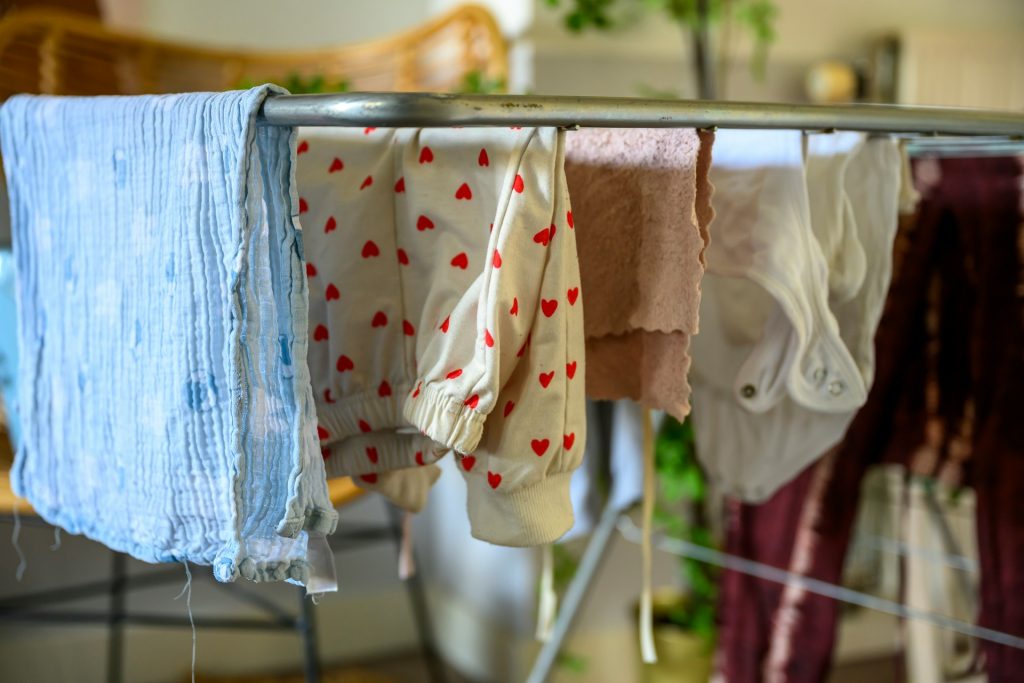
Yes — and for UK households that regularly use an indoor clothes airer, a dehumidifier can be extremely useful.
It does not heat clothes in the same way as a tumble dryer.
Instead, it tackles the reason clothes take so long to dry indoors: the surrounding air becomes increasingly humid.
Wet fabric releases moisture into the air.
As humidity rises, evaporation slows down.
A dehumidifier continually removes that moisture and replaces the damp air around your washing with drier air.
Good airflow then helps the clothes continue releasing water.
The result is faster drying while much of the water from your washing ends up in the dehumidifier tank rather than on your windows and walls.
Our Short Recommendation
For the best dehumidifier for drying clothes in most heated UK homes:
Small household / occasional laundry:
A good 12L compressor dehumidifier can be enough.
Family home / frequent laundry:
A 20L compressor dehumidifier with laundry mode is usually the sweet spot.
Cold utility room or unheated space:
Consider a desiccant dehumidifier instead.
What Makes a Good Laundry Dehumidifier?
Extraction capacity matters, but it isn’t the only thing to look at.
1. Strong airflow
Drying clothes requires both dry air and moving air.
A machine with a powerful fan can circulate dry air through and around the washing.
This is one reason dedicated laundry settings usually increase fan speed.
2. Laundry mode
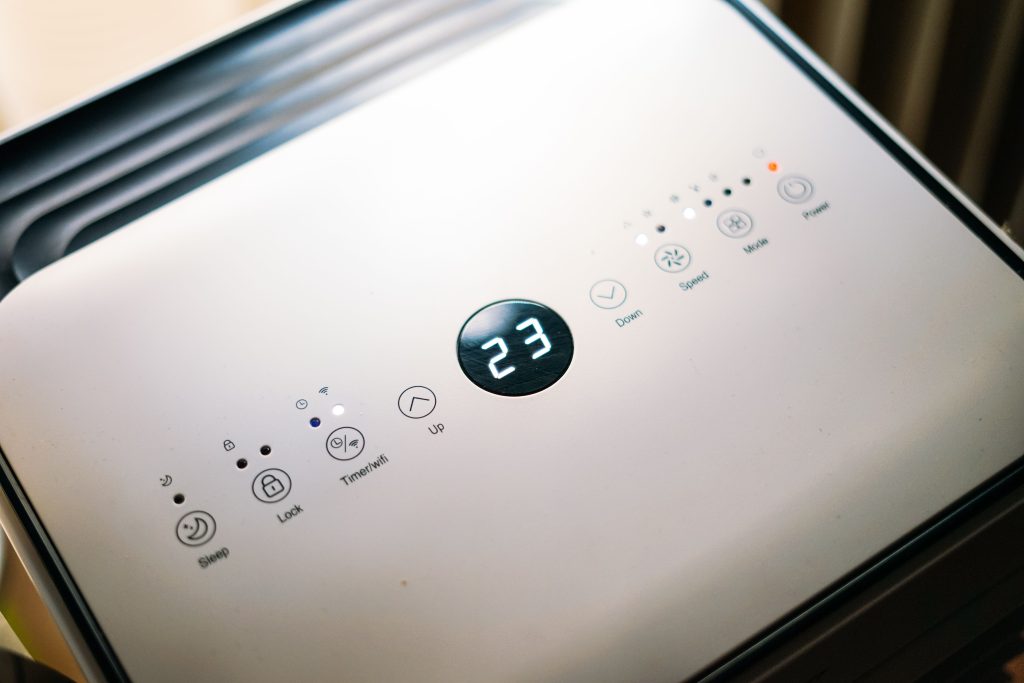
A laundry mode is genuinely useful rather than just a marketing label — provided it changes how the machine behaves.
For example, some current machines automatically switch to high fan speed and run a timed cycle of around six hours.
3. Adjustable louvre
Being able to direct the airflow towards your clothes airer can speed up evaporation.
4. Humidistat
Once laundry has finished drying, you don’t want the machine unnecessarily trying to create desert-like conditions.
A humidistat allows normal operation to stop when the desired humidity has been achieved.
5. Sensible electricity consumption
Compare watts as well as litres.
A powerful dehumidifier that consumes 200W is very different from a heating appliance drawing 2,000W.
12L or 20L for Drying Clothes?
For one or two people, a 12L machine may be sufficient.
But if drying laundry is a major reason for buying the appliance, there is a strong argument for moving up to 20L.
A larger compressor dehumidifier generally provides:
-
higher extraction
-
stronger airflow
-
faster humidity reduction
-
better performance with large loads
-
greater capacity for multiple loads
Current manufacturer figures show how meaningful the difference can be in realistic household conditions: roughly 5 litres per day extraction for some 12L machines versus around 8.5 litres for comparable 20L machines at 20°C and 60% relative humidity.
Internal link: 12L vs 20L Dehumidifier.
The Best Way to Position It
Put your clothes airer in a reasonably small room.
Then:
-
Spread the clothes out rather than overlapping them.
-
Close external windows while actively dehumidifying.
-
Position the dehumidifier close enough to circulate air around the washing without blocking its inlet or outlet.
-
Direct the louvre towards the airer if your machine allows it.
-
Turn the airer around halfway through if one side receives significantly more airflow.
A smaller enclosed drying area will generally be easier to dehumidify than trying to dry one airer in the middle of an entire open-plan house.
Manufacturer guidance similarly recommends positioning the dehumidifier so airflow can pass through the washing and avoiding overcrowding the clothes airer.
Should You Close the Door?
Usually, yes, if your goal is to dry one load as quickly as possible.
Think of the room as a drying chamber.
If you leave every internal door open, the machine is trying to control the humidity of a much larger volume of air.
Keeping the laundry in one room allows it to concentrate on the moisture being released from your washing.
Do not obstruct permanent ventilation systems, and always follow the appliance manufacturer’s instructions.
How Long Will Clothes Take to Dry?
There is no universal answer.
Drying time depends on:
-
the size of the load
-
fabric thickness
-
washing machine spin speed
-
room temperature
-
starting humidity
-
airflow
-
spacing
-
dehumidifier capacity
Light synthetic clothing may dry quickly.
Thick towels, jeans and hoodies take much longer.
Some manufacturers design laundry modes around approximately six-hour cycles, although heavy items can require longer.
Use Your Washing Machine’s Spin Cycle
This is one of the easiest ways to speed the process up.
The more water your washing machine removes mechanically, the less water your dehumidifier has to remove from the room afterwards.
If the fabric allows it, using a high final spin — or an additional spin cycle — can noticeably reduce drying time.
Is a Compressor or Desiccant Dehumidifier Better for Laundry?
In a warm house, compressor.
In a cold utility room, possibly desiccant.
A desiccant machine releases much warmer air and maintains better extraction at low temperatures, which can make it excellent for laundry drying in winter.
However, it usually consumes more electricity.
Internal link: Compressor vs Desiccant Dehumidifier.
What Would Home Tech Expert Choose?
For a typical family drying several loads of washing indoors each week, our starting point would be:
A 20L compressor dehumidifier with:
-
a proper humidistat
-
dedicated laundry mode
-
strong airflow
-
washable filter
-
adjustable louvre
-
automatic tank-full shut-off
-
timer
-
continuous drainage option
That combination is more important than simply choosing whichever machine has the biggest advertised extraction number.
For a smaller flat with one or two occupants, dropping to a good 12L machine can save money and space.
For an unheated laundry room, look at desiccant models.
A Note About Future Product Recommendations
When comparing individual models, Home Tech Expert recommends looking beyond the manufacturer’s headline litres-per-day figure.
Check:
-
power consumption
-
extraction at realistic temperature/humidity
-
airflow
-
noise
-
warranty
-
laundry-mode behaviour
-
tank size
-
replacement filters
These are the figures that actually affect day-to-day use.
Bottom Line
A dehumidifier can be one of the most practical ways to improve indoor clothes drying during a British winter.
For most families, a 20L compressor model with strong airflow and a dedicated laundry mode is the most versatile option.
But the setup matters almost as much as the machine.
Give clothes space, use a good spin cycle, keep the drying area manageable and make sure dry air can circulate through the washing.