12L vs 20L Dehumidifier: The Quick Answer
For many smaller UK homes, flats and one or two-bedroom properties, a 12L dehumidifier is usually plenty.
A 20L dehumidifier makes more sense if you have a larger home, regularly dry washing indoors, have persistent condensation or simply want moisture removed more quickly.
The important thing to understand is that the numbers 12L and 20L do not refer to the size of the water tank.
They describe the maximum amount of moisture the machine can theoretically extract from the air in a 24-hour period under specified test conditions.
In a normal UK home, a 12L dehumidifier is therefore very unlikely to collect 12 litres of water every day.
Likewise, a 20L model will not normally collect 20 litres.
Manufacturers test compressor dehumidifiers under warm, humid laboratory conditions. Extraction falls significantly under the cooler and less humid conditions found in a typical British home.
So rather than simply buying the machine with the biggest number on the box, it is better to match the dehumidifier to your home, temperature and moisture load.
12L vs 20L Dehumidifier Comparison
| Feature | 12L Dehumidifier | 20L Dehumidifier |
|---|---|---|
| Best suited to | Smaller homes and flats | Medium/larger homes |
| Typical use | Condensation, bedrooms, occasional laundry | Heavy condensation, regular laundry, whole-home use |
| Portability | Usually lighter | Usually larger/heavier |
| Electricity use | Generally lower | Generally higher |
| Water extraction | Lower | Higher |
| Laundry drying | Good | Usually faster |
| Purchase price | Usually cheaper | Usually more expensive |
These are general guidelines rather than hard rules because performance varies considerably between manufacturers.
What Does 12L Actually Mean?
The 12-litre rating is the machine’s maximum rated extraction capacity, not its tank capacity.
For example, current Meaco figures demonstrate how different laboratory ratings can be from realistic household conditions.
At approximately 20°C and 60% relative humidity, its 12L compressor models extract around 5 litres per day, while its 20L models extract around 8.5 litres.
That is still a substantial difference — but it shows why expecting 12 or 20 litres of water in your tank every day would be unrealistic.
When Is a 12L Dehumidifier Enough?
A 12L compressor dehumidifier is a good starting point if you:
-
live in a one or two-bedroom flat
-
mainly want to tackle window condensation
-
have one particularly damp bedroom
-
occasionally dry washing indoors
-
have a reasonably warm home
-
want something relatively compact
For a smaller property with ordinary winter condensation, there is often little benefit in buying a huge machine purely because its headline extraction figure is larger.
A correctly sized 12L machine with a humidistat can switch its compressor off once the target humidity is reached.
When Should You Choose a 20L Dehumidifier?
A 20L model becomes more attractive if you:
-
live in a three or four-bedroom home
-
have condensation in several rooms
-
dry multiple loads of washing indoors each week
-
have a family producing a large amount of household moisture
-
want to position one dehumidifier centrally and manage several rooms
-
have a particularly persistent damp or condensation problem
A larger model can process more air and remove moisture more quickly.
Current manufacturer guidance, for example, commonly positions 12L models around smaller one-to-two-bedroom homes and 20L models around larger three-to-four-bedroom homes.
Is a 20L Dehumidifier More Expensive to Run?
Usually, yes — but perhaps not by as much as you might expect.
Take two current compressor models as an illustration.
A 12L machine drawing around 151W would cost roughly:
0.151kW × 26.32p = 3.97p per hour
A 20L machine drawing around 216W would cost roughly:
0.216kW × 26.32p = 5.69p per hour
These figures use the Ofgem average electricity unit rate of 26.32p/kWh applying from 1 October to 31 December 2026. Your actual tariff may be different.
The larger dehumidifier therefore costs more while its compressor is running, but it may also remove the required moisture more quickly.
This is why comparing wattage alone does not always tell you which machine will cost less over an entire day.
Internal link: Read our full guide to [how much a dehumidifier costs to run].
Which Is Better for Drying Clothes?
If laundry drying is one of the main reasons you are buying a dehumidifier, I would generally lean towards a 20L compressor model for a family home.
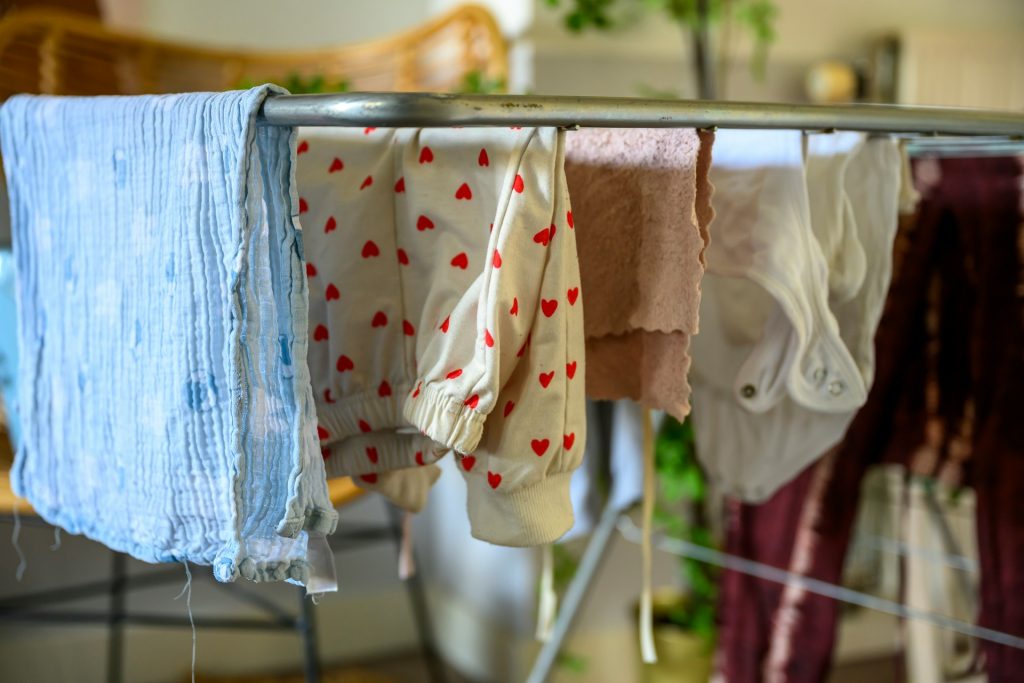
Wet washing releases a substantial amount of moisture into the room.
A more powerful dehumidifier can remove that moisture faster, while stronger airflow helps water evaporate from the clothes.
Many modern machines also include a dedicated laundry mode that increases fan speed for several hours.
Manufacturers such as Meaco typically programme laundry modes to run at a high fan speed for around six hours.
For one person or a couple doing smaller loads, however, a good 12L machine may be entirely adequate.
Internal link: See our guide to the [best dehumidifier for drying clothes].
Don’t Forget Room Temperature
Size isn’t the only thing that matters.
Most 12L and 20L domestic units are compressor dehumidifiers.
Compressor machines perform best in reasonably warm rooms.
As the temperature falls, they become less efficient and need to spend more time defrosting.
For genuinely cold spaces such as an unheated garage, conservatory or utility room, a desiccant dehumidifier can make more sense.
As a rough guide, manufacturer guidance suggests:
-
Above 15°C: compressor machines generally perform well.
-
10–15°C: larger compressor models or desiccant machines may work well.
-
Below 10°C: desiccant models generally have the advantage.
Internal link: Read [Compressor vs Desiccant Dehumidifier] before buying for a cold room.
12L vs 20L: Which Would We Choose?
For a small flat or one-to-two-bedroom home, start with a good-quality 12L model.
For a three-to-four-bedroom house, regular indoor laundry or significant condensation, the additional capacity of a 20L model is usually worth considering.
If you are on the boundary between the two and the purchase price is similar, choosing the larger model gives you more capacity without necessarily creating a huge increase in running costs.
But don’t buy based on litres alone.
Also compare:
-
wattage
-
airflow
-
noise level
-
humidistat controls
-
laundry mode
-
water tank capacity
-
continuous drainage
-
warranty
-
replacement filter costs
Bottom Line
A 12L dehumidifier is not automatically too small, and a 20L machine is not automatically better.
The right choice depends on how much moisture your home produces.
Choose 12L for: smaller properties, individual rooms and moderate condensation.
Choose 20L for: larger homes, frequent laundry drying and more serious moisture problems.
And if the space is particularly cold, the more important decision may actually be compressor versus desiccant, rather than 12L versus 20L.