Can You Leave a Dehumidifier Running Overnight?
Only if the manufacturer of your particular dehumidifier says it is suitable for unattended or overnight operation.
That qualification matters.
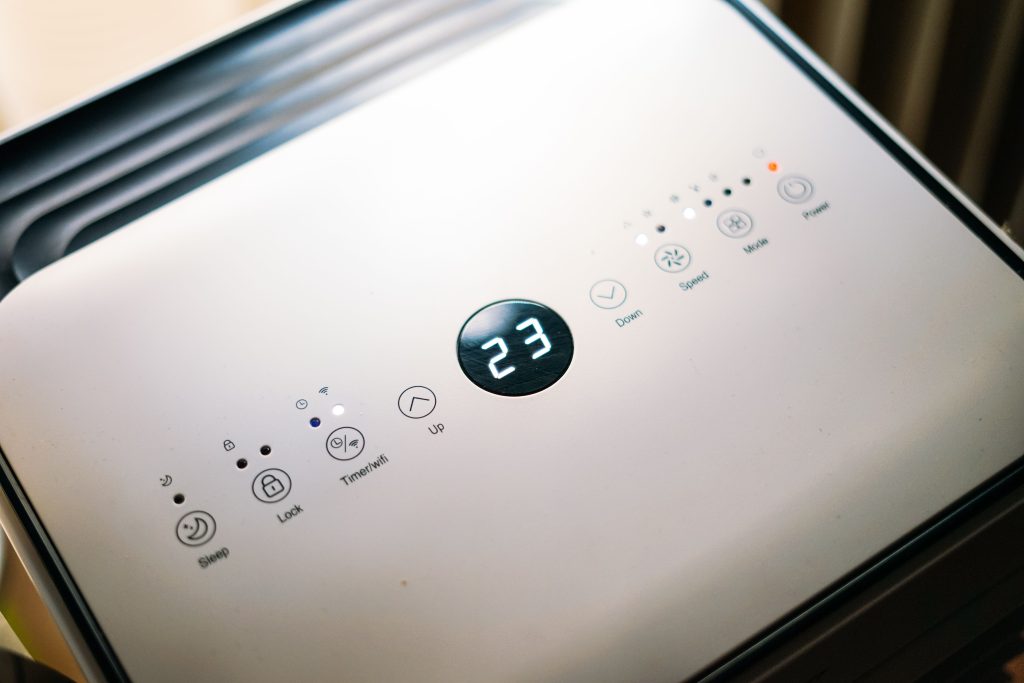
Modern dehumidifiers often have features such as:
-
humidistats
-
timers
-
automatic tank-full shut-off
-
automatic restart
-
temperature protection
But you should not simply assume that every appliance is intended to operate while everyone in the house is asleep.
Electrical Safety First specifically advises avoiding overnight or unattended operation unless the manufacturer states that it is safe.
Why Do People Run Them Overnight?
Bedrooms often develop their worst condensation overnight.
People release moisture simply by breathing, while outdoor temperatures fall and windows become colder.
By morning, the result may be:
-
wet glass
-
damp window frames
-
condensation around reveals
-
high bedroom humidity
Running a dehumidifier can reduce the amount of moisture available to condense.
Do You Need It Running Continuously?
Usually not.
A good dehumidifier doesn’t necessarily run its compressor every minute that it is switched on.
A humidistat monitors relative humidity.
Once the target is reached, many machines stop actively dehumidifying and periodically check the air again.
Some current models explicitly use this type of automatic control for unattended operation.
Is It Better to Run It Before Bed?
Often, yes.
If your room is very humid, running the machine for several hours during the evening may bring the humidity under control before you sleep.
You then have three possibilities:
-
Turn it off before bed.
-
Use a timer.
-
Leave it operating only if the manufacturer explicitly permits unattended overnight use.
This can also avoid fan or compressor noise disturbing your sleep.
What About Running Costs?
Suppose a dehumidifier consumes 200W while actively running.
At 26.32p/kWh:
0.2 × 26.32p = 5.26p per hour.
Eight hours of continuous compressor operation would theoretically cost around 42p.
In reality, a humidistat-controlled machine may cycle off once the target humidity is reached, so actual consumption can be lower.
The electricity figure above uses the Ofgem average Direct Debit unit rate applying from 1 October to 31 December 2026.
Safety Checklist Before Overnight Use
Even if your manufacturer permits it:
-
place the appliance on a stable level surface
-
make sure vents are clear
-
keep curtains and bedding away
-
check the plug and cable for damage
-
clean filters at the recommended interval
-
don’t allow the machine to be splashed
-
make sure the tank-full shut-off functions properly
-
register the appliance for product-recall notifications
-
follow the manufacturer’s clearance instructions
Electrical Safety First additionally advises stopping use if you notice burning smells, unusual noise or overheating.
Should You Use an Extension Lead?
A nearby permanent wall socket is preferable where practical.
If extensions are used, they must be correctly rated and not overloaded.
Never daisy-chain extension leads.
Electrical Safety First warns that overloaded or coiled extensions can overheat and create a fire risk.
What Humidity Should You Set?
You don’t normally need the machine trying to maintain extremely dry air.
For everyday household moisture control, a setting somewhere around 50–60% RH is a sensible starting point for many homes.
If condensation remains severe, investigate why so much moisture is entering the room or why surfaces are becoming unusually cold.
What If the Tank Fills Overnight?
Modern domestic machines commonly include an automatic tank-full shut-off.
The dehumidifier should stop extracting water when the container reaches capacity.
But confirm that feature in your own manual rather than assuming it is present.
Continuous drainage is another option on many units, but hoses must be installed correctly.
Bottom Line
A dehumidifier can reduce overnight humidity and morning condensation.
But the safe answer isn’t simply, “Yes, leave every dehumidifier on all night.”
It is:
Check whether your exact model is designed for unattended overnight operation.
If it isn’t — or you cannot confirm — run it earlier in the evening and turn it off before bed.