Asking yourself ‘What size dehumidifier do I need?’ Not sure whether you need a 10L, 12L, 20L or 25L dehumidifier? For most UK homes, a 10–12 litre model is a good starting point for a flat or smaller home, while 20–25 litre models make more sense for larger properties, families, frequent indoor laundry or more serious condensation problems.
There is, however, a little more to it than simply counting your bedrooms.
The number of people living in your home, how often you dry washing indoors, the temperature of your rooms and just how damp the property is can all make a surprisingly big difference.
And there is another important detail that isn’t always obvious when shopping:
A “20L dehumidifier” does not necessarily remove 20 litres of water from a typical British home every day.
In this guide we’ll explain exactly what the numbers mean, how 10L, 12L, 20L and 25L machines compare, and how to choose the right size without unnecessarily buying something too large.
Give me the quick answer! What size dehumidifier do I need?
| Dehumidifier Size | Best For |
|---|---|
| 10L | Small bedrooms, offices and lightly affected rooms |
| 12L | Bedrooms, small flats and everyday condensation |
| 20L | Larger rooms, 2–3 bedroom homes and drying laundry |
| 25L+ | Larger homes, persistent damp and heavy moisture loads |
Check out our comparison of the Meaco 12L vs 20L vs 25L range
These shouldn’t be treated as absolute limits.
For example, a very damp two-bedroom flat occupied by four people who regularly dry washing indoors could benefit more from a 20L machine than a 10L model. Conversely, a relatively dry three-bedroom home with only occasional window condensation might be perfectly adequately served by a 12L machine.
Manufacturer guidance illustrates the same point. Meaco’s current sizing table, for example, recommends progressively larger machines as relative humidity and moisture problems increase — even when the number of bedrooms stays the same.
Home Tech Expert recommendation: use the number of bedrooms to choose your starting size, then increase the capacity if you have lots of occupants, regularly dry laundry inside or have widespread condensation.
What does 10L, 12L, 20L or 25L actually mean?
This is probably the most important thing to understand before buying a dehumidifier.
The litre rating refers to the maximum amount of water the machine can extract from the air over 24 hours under specified test conditions.
It does not refer to the capacity of the water tank.
A 20L dehumidifier therefore doesn’t contain a 20-litre bucket. Its tank might only hold around four or five litres.
Nor should you necessarily expect a 20L machine to collect 20 litres of water every day.
Manufacturers normally establish the headline extraction figure under considerably warmer and more humid conditions than you’ll find in a typical British home. De’Longhi, for example, specifies its current 12L AriaDry Evo’s 12-litre extraction figure at 30°C and 80% relative humidity.
A British bedroom at 18–20°C and around 60% humidity is a very different environment.
And this has a dramatic effect on extraction.
What happens in more realistic conditions?
Meaco publishes extraction figures at several different temperatures and humidity levels for its current Arete Two range, which makes a useful real-world example:
| Nominal size | At 10°C / 60% RH | At 20°C / 60% RH | At 30°C / 80% RH |
|---|---|---|---|
| 10L | 1.38 L/day | 4.19 L/day | 10.75 L/day |
| 12L | 1.97 L/day | 5.40 L/day | 11.99 L/day |
| 20L | 3.35 L/day | 8.50 L/day | 20.45 L/day |
| 25L | 3.55 L/day | 10.85 L/day | 25.25 L/day |
What affects the size of dehumidifier you need?
There are five main things worth considering.
1. The size of your home
More rooms generally mean more air to process and more surfaces from which stored moisture can gradually evaporate.
This is why a 20L model is normally a more sensible whole-house choice for a three- or four-bedroom family home than a small 10L machine.
However, floor area alone doesn’t tell the whole story.
2. How many people live there
Every person adds moisture to a house through normal activities including breathing, showering, cooking and washing clothes.
More people generally also means:
more showers
more cooking
more washing
more wet towels
more laundry drying indoors
The Energy Saving Trust says a household can produce up to around 100 litres of moisture per week, although the exact amount varies considerably with household size, lifestyle and appliances.
A four-person family living in a two-bedroom home can therefore place substantially more demand on a dehumidifier than one person living in a property of the same size.
3. How damp the property is
Consider what you’re actually trying to solve.
Mild moisture problem
Perhaps you have:
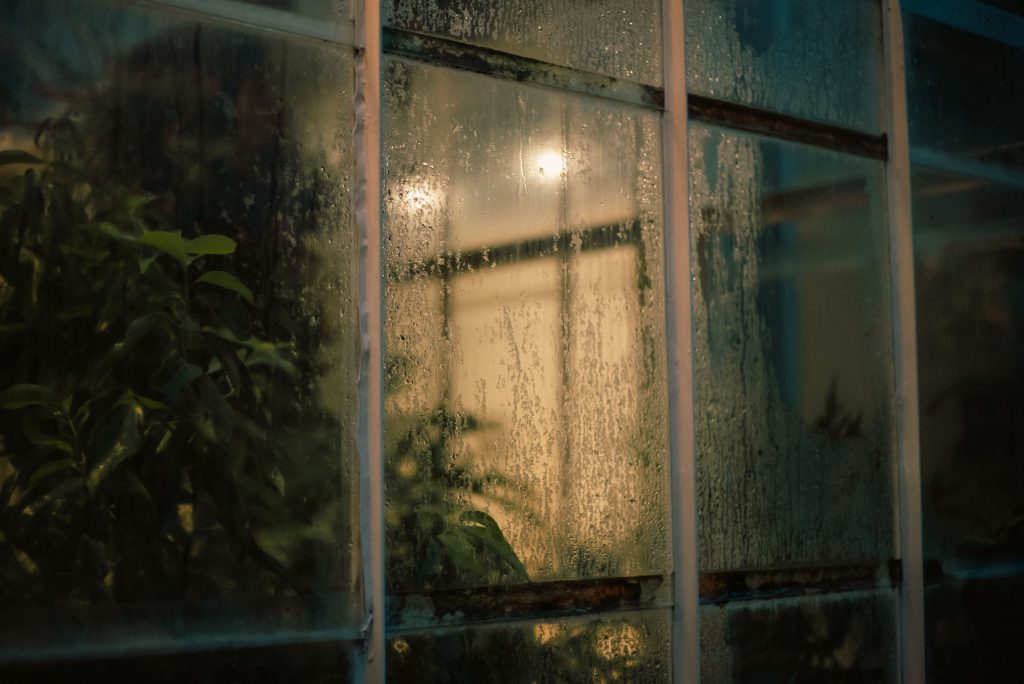
condensation on bedroom windows on colder mornings
humidity around 55–65%
an occasional musty smell
one particularly troublesome room
A 10L or 12L unit may be plenty.
Moderate moisture problem
Perhaps you have:
regular condensation
humidity frequently above 60–65%
several affected rooms
small areas of recurring mould
washing regularly drying indoors
This is where moving towards a 12L or 20L machine makes sense.
Significant moisture problem
If you’re seeing:
very heavy condensation
consistently high humidity
dampness across several rooms
large amounts of laundry drying indoors
moisture returning very quickly
A 20L or 25L unit offers considerably more extraction capacity.
Remember, though, that a dehumidifier should not be used to disguise an underlying building fault.
Leaks, defective guttering, failed damp-proofing and penetrating or rising damp require the source of the moisture to be repaired. The Energy Saving Trust distinguishes these problems from condensation caused by moisture accumulating within the home.
4. Whether you dry clothes indoors
This can make a major difference.
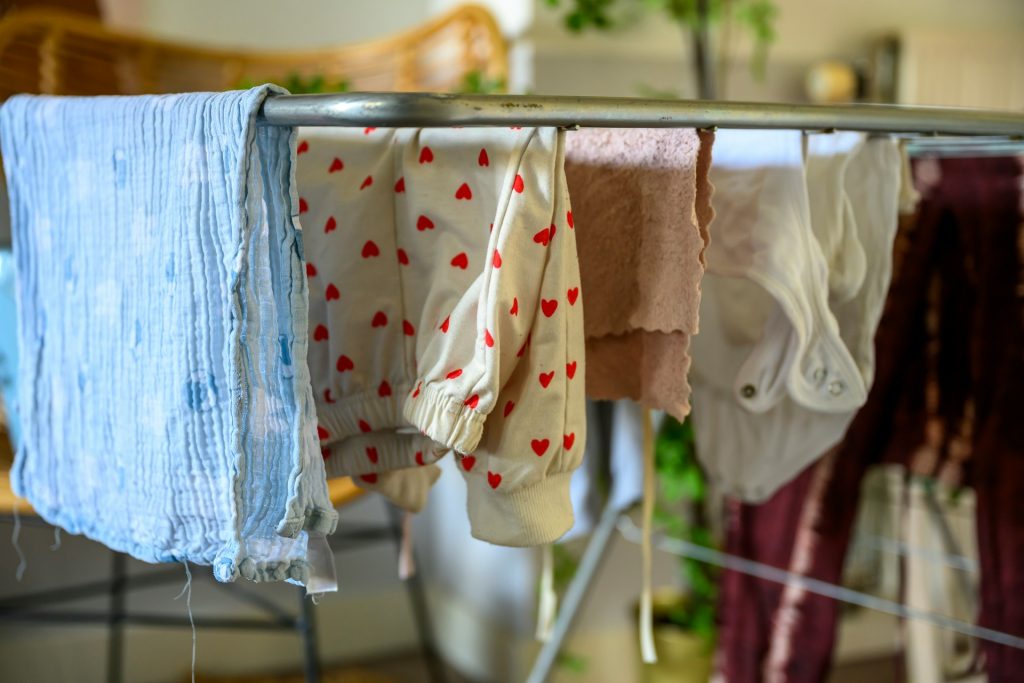
If washing is regularly placed on an airer indoors, all of the water that hasn’t been removed during the washing machine’s spin cycle has to go somewhere.
Without adequate removal, much of it eventually ends up in the surrounding air.
For occasional laundry, a 10L or 12L model can still be useful.
But if you regularly dry full loads indoors, particularly for a family, we’d favour a 20L-class machine.
A larger unit generally combines greater extraction capacity with higher airflow, both of which can help when drying clothes.
Which? similarly classifies 18L+ machines as large-capacity units suited to situations where significant amounts of moisture need to be removed, including indoor laundry.
5. How warm the room is
This factor is often overlooked.
Most 10L, 12L, 20L and 25L domestic models are compressor — or refrigerant — dehumidifiers.
These generally perform best in normal heated living spaces.
Their ability to extract water decreases considerably as temperatures fall.
Look again at the example 20L machine above:
20°C / 60% RH: 8.50 litres/day
10°C / 60% RH: 3.35 litres/day
Simply buying the larger 25L version doesn’t entirely solve the problem either: at 10°C and 60% RH its published extraction is only 3.55 litres/day.
If you’re trying to control humidity in an unheated garage, workshop, conservatory or other genuinely cold space, the type of dehumidifier may therefore matter more than moving from 20L to 25L.
Which? recommends considering a desiccant dehumidifier for unheated garages, conservatories and similar outbuildings because desiccant units remain effective at lower temperatures.
What humidity should I aim for?
For most homes, we’d aim to maintain relative humidity at approximately 50–60% rather than trying to make the air as dry as possible.
UK Housing Health and Safety Rating System guidance describes 40–60% relative humidity as the desirable indoor range, apart from short-term fluctuations.
A target around 55% RH is therefore a sensible everyday setting for many homes.
If your reading briefly climbs after somebody showers or cooks, that doesn’t necessarily indicate a problem.
What matters more is whether humidity remains high for extended periods and whether you’re experiencing persistent condensation or mould.
A cheap standalone hygrometer can be useful here. It lets you see whether your problem is genuinely high humidity and whether the dehumidifier is actually bringing it under control.
Can a dehumidifier be too big?
Within reason, slightly oversizing a domestic dehumidifier isn’t normally a major problem — particularly if it has a reliable humidistat.
Once the target humidity is reached, a modern machine can reduce or stop dehumidification rather than continuing to dry the room indefinitely.
However, there is still little reason to buy far more capacity than you require.
A larger machine may cost more to buy, take up more space and be heavier or noisier.
And importantly, bigger doesn’t automatically mean cheaper to run.
Compare actual power consumption, extraction at realistic temperatures, airflow and humidistat operation rather than assuming that a larger machine will necessarily save electricity.
What if I only want a dehumidifier for one room?
You don’t necessarily need a large machine simply because the house itself is large.
If you’re treating just:
one bedroom
a utility room
a home office
one living room
a 10L or 12L compressor dehumidifier could be perfectly adequate.
The important distinction is whether you’re buying a room dehumidifier or expecting one machine to manage humidity throughout the entire property.
For whole-house use, air has to be able to circulate towards the machine. Closed bedroom doors will obviously limit how effectively a unit positioned elsewhere can deal with those rooms.
What size dehumidifier is best for drying clothes?
If laundry drying is going to be one of the main jobs, we would generally choose a 20L machine where budget and space allow.
A 10L or 12L machine can still dry clothes — particularly in a small closed room — but the additional extraction and airflow of a good 20L model can make it considerably more useful for regular family laundry.
Look for:
a dedicated laundry mode
strong airflow
an adjustable louvre if available
a decent-sized water tank
continuous drainage if useful
an accurate humidistat
When using a dehumidifier for laundry, keep exterior windows closed during the drying session so the appliance is treating the room rather than continually trying to dehumidify incoming outdoor air. Which? gives the same advice for normal dehumidifier operation.
Don’t use a dehumidifier as a substitute for ventilation
This is an important distinction.
A dehumidifier removes water from the existing indoor air.
It doesn’t replace that air with fresh air.
Homes still need appropriate ventilation to remove pollutants and maintain indoor air quality. The Energy Saving Trust specifically advises that dehumidifiers aren’t a substitute for good ventilation and recommends making proper use of measures such as extractor fans and trickle vents.
So although you might close a window while actively running the dehumidifier, that doesn’t mean permanently blocking intended ventilation.
In kitchens and bathrooms especially, proper extraction remains important.
Will a dehumidifier solve damp and mould?
It depends on what is causing the moisture.
A dehumidifier can be very effective against condensation-related humidity caused by normal activities such as:
breathing
cooking
showering
bathing
drying clothes indoors
Government guidance identifies condensation as one of the most common causes of damp and mould in homes, with household activities contributing moisture that can accumulate when it isn’t adequately removed.
But a dehumidifier cannot repair:
a leaking pipe
a damaged roof
overflowing guttering
penetrating damp
failed waterproofing
defective damp-proofing
If a wet patch becomes worse when it rains, appears in one specific part of a wall, or returns regardless of indoor humidity, investigate the source rather than relying on a dehumidifier.
Home Tech Expert’s simple dehumidifier sizing rule
If you want to simplify everything in this article into one method, use this:
Step 1 — Choose your starting size
Single room / compact 1–2 bedroom home:
Start at 10L
1–2 bedroom home / small 3-bedroom home:
Start at 12L
3–4 bedroom family home:
Start at 20L
Large 4–5 bedroom home:
Start at 25L
Step 2 — Move up one size if:
four or more people live there
you regularly dry washing indoors
several rooms have condensation
humidity frequently exceeds 65–70%
you need rapid moisture removal
Step 3 — Check the temperature
If the space is normally heated, a compressor model will suit most situations.
If it’s regularly cold — particularly an unheated garage, conservatory or workshop — compare desiccant dehumidifiers instead of simply buying a larger compressor model.
Frequently asked questions
For a normally heated two-bedroom UK home with one or two occupants and mild condensation, we’d start with 10–12 litres.
Choose 12L or consider 20L if several people live there, humidity is persistently high or you regularly dry laundry indoors.
A 12L machine can be suitable for a lightly affected three-bedroom property, but we’d lean towards 20L for a family home, regular laundry or condensation affecting several rooms.
A 20L compressor dehumidifier is a sensible starting point for most four-bedroom homes.
Consider 25L if the property is particularly damp, has many occupants or large amounts of washing are regularly dried indoors.
Usually, yes.
A modern 10L compressor dehumidifier should offer ample capacity for a typical heated bedroom unless there is an unusually severe damp problem.
Noise may actually be more important than maximum extraction if you intend to operate it near where you sleep.
Choose 12L for a smaller home with a relatively modest moisture problem.
Choose 20L if you’re dealing with a family home, several damp rooms or frequent indoor laundry.
If the price difference is affordable and you expect your moisture requirements to increase, the additional capacity of a 20L machine can also provide useful headroom.