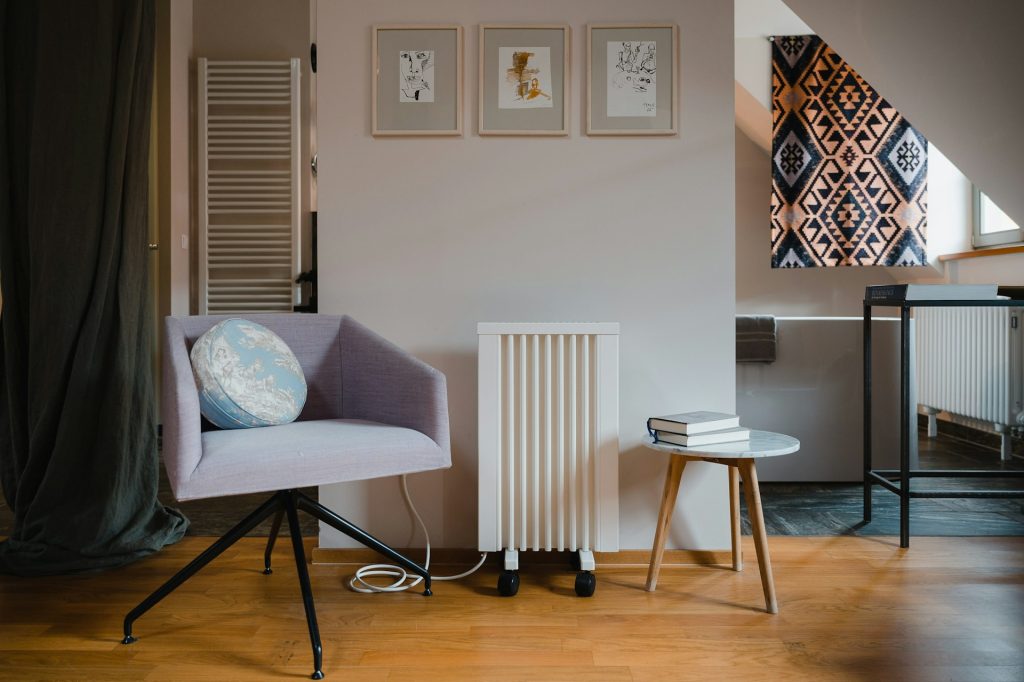
Comparing a convector heater vs an oil-filled radiator for a UK home? A convector is worth considering when you want responsive room heating; an oil-filled radiator may suit a longer occupied session where a gradual release of warmth is welcome. Neither design has an automatic running-cost advantage simply because of its name.
The better choice depends on your room, routine and the controls on the specific appliance. This guide compares the practical differences, then shows how to check a running-cost claim before paying extra for it.

Convector heater vs oil-filled radiator: the key differences
A convector heats air that circulates through the room. An oil-filled radiator heats fluid inside its body, then releases heat from the warmed appliance. The fluid adds a delay at start-up and retains some warmth after switch-off. Dimplex explains these differences in its guide to direct-acting heating.
| What to compare | Convector heater | Oil-filled radiator |
|---|---|---|
| Response | Generally responds more quickly | Warms and cools more gradually |
| Heat after switch-off | Usually less residual warmth | Stored warmth continues to be released |
| Controls | Check thermostat and timer on the model | Check thermostat and timer on the model |
| Hourly electricity cost | Depends on power used and tariff | Depends on power used and tariff |
These are broad tendencies, not measured warm-up times for every product. Compare appliances with suitable output for your room. A comparison between a small radiator and a much more powerful convector would tell you little about the designs themselves.
Which is cheaper to run?
Both use electrical resistance to produce heat. The US Energy Information Administration describes resistance heaters as converting electricity into heat with 100% thermal efficiency. That point-of-use efficiency does not mean the appliances have identical controls or that electric heating is cheap.
Start with energy use: kWh = power in kW × hours drawing that power. Multiply the result by your electricity unit rate. At an illustrative 25p/kWh, a 2kW heater running continuously for one hour uses 2kWh and costs 50p, whether it is a convector or an oil-filled radiator. This rate is an example, not a current tariff quote.
A thermostat complicates an hourly estimate because the element may cycle off once the room is warm. If a 2kW element is energised for a total of 30 minutes during an hour, its element consumption is 1kWh: 25p at the example rate. That is an arithmetic example, not a prediction of either heater’s duty cycle. Small control or fan loads may add to consumption.
For a fuller explanation, read our 2kW electric heater running-cost guide. Use the unit rate on your bill and keep standing charges separate when working out the additional cost of the appliance.
Why warmth after switch-off is not free heat
An oil-filled radiator can still feel warm after the element stops drawing power. That warmth comes from energy put into it earlier. Think of it as a different delivery schedule for paid-for heat, rather than an extra source of energy.
Whether you value the delay depends on your routine. Imagine leaving your desk at 5pm: heat released after you leave may be less useful to you than heat delivered during the working day. Conversely, someone staying in the room may welcome that gradual release. That is a comfort and timing decision, not proof of a fixed percentage saving.
Choose around your routine
For a room used in short sessions
Put response time and easy controls high on your checklist. Consider how long you will actually occupy the room, not just how quickly the casing feels warm. If a retailer claims a particular warm-up time, check the room size, starting temperature and test conditions behind it.
For an occupied home office or lounge
Focus on how easily you can maintain a comfortable temperature. Check whether the thermostat uses degrees or an unmarked dial, whether the settings are readable from your chair, and whether the appliance remembers them after being switched off. Read the manual before relying on a timer or app feature.
For moving between rooms
Compare the actual weight, handle, castors, storage footprint and cable length in the specifications. Do not assume that “portable” means easy to carry upstairs. Plan a safe position near a wall socket in each room before choosing a model.
How to judge an energy-saving claim
Ask what is being compared. A claim based on heating one room instead of several is different from a claim that a particular heater needs less electricity to deliver the same amount of heat. A thermostat or schedule can help avoid unwanted operation, but the result depends on how it is used.
For a sensible comparison, keep the room, target temperature and occupied hours similar. Record kWh, not just hours switched on, and note changes in outdoor conditions. One mild afternoon is not a reliable test of which appliance will be cheaper throughout winter.
Before spending more on a premium model, write down the feature you expect to use. A clearer thermostat or more convenient controls may justify the price for you; an unsupported promise of universally cheaper heat should not.
Portable heater safety applies to both designs
Follow the manual and Electrical Safety First’s advice: keep combustible items at least one metre away, avoid extension leads, and never leave a portable heater running unattended or while asleep. Keep washing off the heater. Hot surfaces remain a consideration after switch-off.
Frequently asked questions
Is an oil-filled radiator always cheaper than a convector?
No. Compare actual kWh used at the comfort level you need. Equal electricity consumption on the same tariff costs the same, regardless of the heater design.
Is a convector the same as a fan heater?
Not necessarily. Check whether the specific convector includes a fan. If you are considering a fan heater too, see our separate oil-filled radiator vs fan heater comparison.
Which should I shortlist first?
For quick response, investigate suitable convectors. For gradual heat delivery, compare oil-filled radiators. In either case, check room suitability, controls and safe placement before purchase. Explore our Heating guides and Energy & Running Costs articles for related advice.